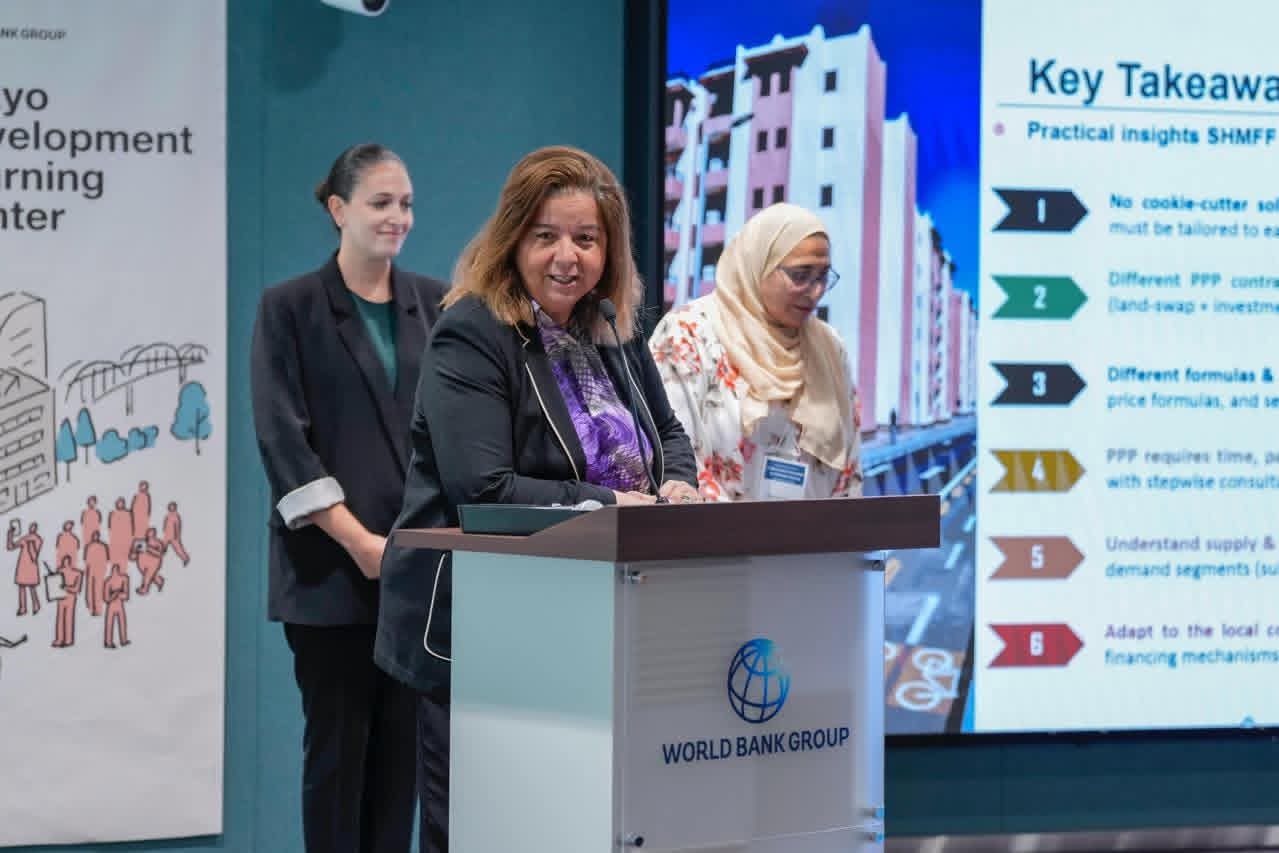

Egypt’s bold strides in affordable housing were spotlighted on the global stage this week, as Mai Abdel Hamid, CEO of Egypt’s Social Housing and Mortgage Finance Fund (SHMFF), presented the country’s flagship housing initiative at a World Bank workshop hosted in Tokyo, in collaboration with the Tokyo Development Learning Center (TDLC).
Held under the theme of “Public-Private Partnerships in Social Housing”, the event gathered over 55 officials and experts from 10 countries, including public and private sector leaders, international finance institutions, and Japanese development specialists.

A Model for Inclusive, Tech-Driven Housing Reform
In three keynote sessions, Abdel Hamid detailed Egypt’s transformative experience in delivering affordable housing to low-income citizens through the presidential initiative “Housing for All Egyptians.”
She emphasized that digitization has been central to the program’s success:
“We’ve digitized the entire service chain—from purchasing application booklets to submitting documents, tracking requests, and filing grievances. This has not only reduced bureaucracy and wait times, but also enhanced transparency and governance,” Abdel Hamid explained.
The full digital transformation of the fund’s services has significantly minimized direct contact between citizens and government offices, thereby curbing opportunities for corruption and improving user experience.
From Skepticism to Scale: Gaining Financial Sector Confidence
Abdel Hamid acknowledged early reluctance from the banking sector to participate in the program, with only four banks joining initially. However, through strategic policy adjustments and collaboration, the number of participating financial institutions has now grown to 30 lenders.
She also highlighted that the program operates on clearly defined, publicly disclosed eligibility criteria, ensuring equity and transparency in unit allocation.
Expanding Financial Inclusion Through Housing
The presidential initiative has not only provided homes but also expanded financial inclusion:
- 23% of unit recipients are from informal professions, many entering the formal financial system for the first time
- 65% of all beneficiaries are now fully integrated into Egypt’s financial ecosystem
- Women’s home ownership rates rose from 5% to 24%
- 5% of units are allocated to persons with disabilities, with full accessibility features
“Through subsidized mortgage schemes—8% for low-income and 12% for middle-income households—we’ve expanded access to long-term, affordable home ownership while supporting macroeconomic goals,” Abdel Hamid said.
Greener Homes for a Sustainable Future
Abdel Hamid also showcased Egypt’s pioneering Green Social Housing Initiative, developed in cooperation with the World Bank, IFC, and Egypt’s National Housing & Building Research Center.
Despite higher upfront costs, the initiative promotes environmentally friendly housing for low-income families, aligning with Egypt’s long-term sustainable development goals.
“Green housing is not a luxury—it’s a future necessity. By acting now, we are investing in better health outcomes, energy savings, and climate resilience for generations to come,” she added.
Advancing Egypt’s Development Model on the Global Stage
Egypt’s participation in the Tokyo workshop underscores its emerging role as a global leader in inclusive housing policy, particularly in the Global South. Abdel Hamid’s meetings with World Bank Tokyo Director Takami Hiroshi and Egypt’s Ambassador to Japan, Raouf El-Etreby, explored new avenues for showcasing Egypt’s developmental breakthroughs and engaging the Japanese government and private sector as strategic partners.
“Our housing model is not just about buildings—it’s about dignity, equity, and opportunity,” Abdel Hamid concluded. “We look forward to sharing this experience with countries facing similar challenges.”