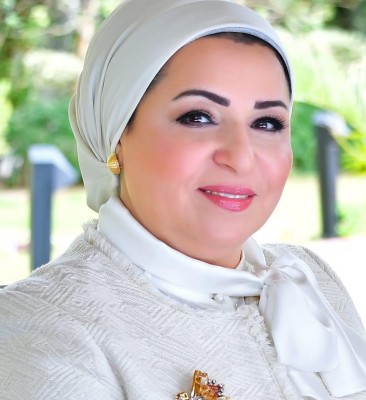

Egypt today observes the birthday of First Lady, Entissar El Sisi, a moment that invites reflection not on personal milestones, but on the steady influence she has exerted across the country’s cultural and social landscape. Over the years, she has come to embody a quiet but persistent form of public service—one rooted in nurturing education, advancing women’s roles in society, and encouraging creative expression among the next generation.
Her advocacy for education has been particularly notable, especially her emphasis on elevating technical and vocational training. By spotlighting students and institutions that are reshaping the nation’s workforce, she has reinforced the idea that the country’s future depends not only on academic achievement but on practical innovation and skill development.

Besides, her patronage of initiatives that celebrate children’s creativity has helped bring national attention to young talents whose artistic and intellectual contributions often go unrecognized. These efforts reflect a broader belief that a society’s progress hinges on its ability to empower its youth to imagine, express, and create.
Women’s empowerment remains another consistent thread in her work. In public remarks and initiatives alike, she has cast Egyptian women as pillars of resilience—mothers, leaders, and professionals whose contributions shape the nation’s trajectory. Her voice has added momentum to ongoing dialogue about women’s rights, opportunities, and recognition across all sectors of society.
Though her role is not one defined by political declarations, her influence is woven through community-driven development projects and social programs that mirror Egypt’s wider national ambitions. She has become a symbol of continuity and compassion at moments when the country seeks unity and national purpose.
The celebration becomes, in essence, a reflection of hope: that empowered women, inspired children, and educated youth will continue to shape Egypt’s future in meaningful ways.