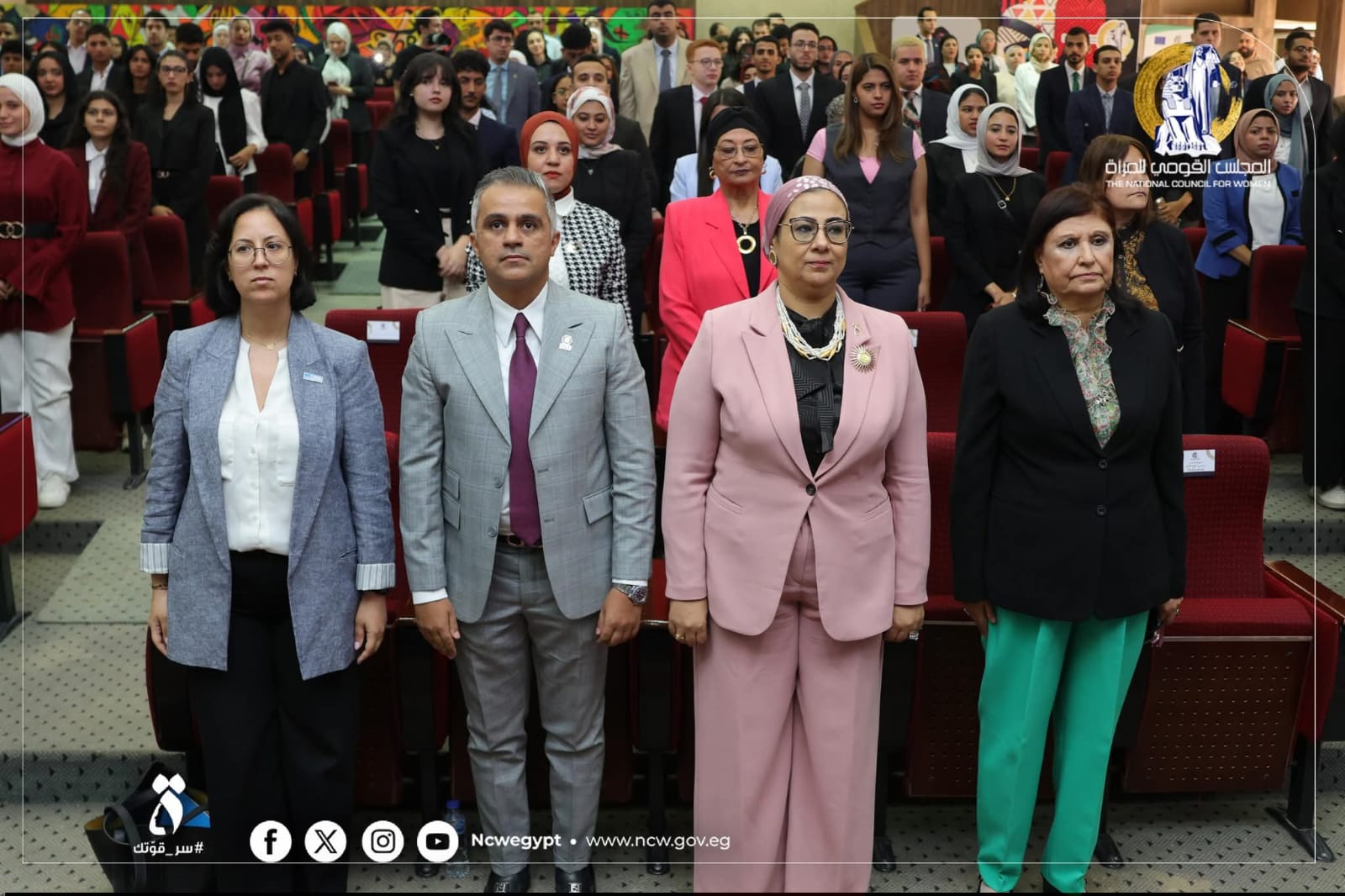

In a landmark event marking the 25th anniversary of United Nations Security Council Resolution 1325 on Women, Peace, and Security, the National Council for Women (NCW) in Egypt has launched a pioneering initiative: a national simulation of the UN Security Council open debate on women, peace, and security, the first of its kind in the country.
The simulation, designed to empower university students to step into the roles of global decision-makers, is being implemented in collaboration with UN Women Egypt, the Young Leaders Foundation (YLF), and supported by the Spanish Agency for International Development Cooperation (AECID).

At the launch event, Counselor Amal Ammar, President of the NCW, declared that “This initiative is not just a training—it is a message of hope. It shows that Egypt’s youth are capable of becoming true ambassadors for change, justice, and equality.”
She stressed the urgent need to integrate gender equality and women’s empowerment in all peace and security frameworks, adding that “peace cannot be fully realized without women at the table.”
Empowering Future Peacebuilders
The initiative includes a fully immersive diplomatic experience for over 230 students from 26 Egyptian universities across five governorates, including students with disabilities and a majority of female participants. Students will assume the roles of UN Security Council member states, the UN Secretary-General, and observers, while drafting policy papers, negotiating, and debating resolutions related to the global Women, Peace, and Security agenda.
Only 50 top-performing students will proceed to an intensive training program, culminating in a final simulation that mirrors the real structure and procedures of the UN Security Council’s annual open debate on Resolution 1325.
Bridging National Vision with Global Commitments
Amal Ammar emphasized Egypt’s long-standing commitment to international peace and the prominent role of women in both peacekeeping and national development. She cited the leadership of President Abdel Fattah El-Sisi, who has consistently made women’s empowerment and youth leadership national priorities.
“Investing in women and youth is not a luxury; it is the foundation for inclusive peace and sustainable development,” she said, quoting former UN Secretary-General Kofi Annan: ‘There is no policy more effective in promoting development, health, and education than the empowerment of women and girls.’
The The national debut of the simulation initiative aligns with Egypt’s national efforts to implement UNSCR 1325, and supports the broader strategy to engage youth in policy-making, conflict prevention, and peacebuilding.
Partners in Progress
The event was attended by an esteemed lineup of officials, including:
-
Ms. Marwa Alam El-Din, Officer-in-Charge, UN Women Egypt
-
Ms. Rana Korayem, Programmes Manager for Women’s Empowerment, UN Women Egypt
-
Dr. Nesreen El Baghadady, Deputy President, National Council for Women (NCW)
-
Ambassador Wafaa Bassim, Member of the NCW Board and Head of the International Relations Committee
-
Ambassador Mona Omar, Deputy Head, International Relations Committee, NCW
-
MP Ahmed Fathy, Chairman and Founder, Youth Leaders Foundation (YLF)
Also participating in the panel discussions were:
-
Mr. Basel El-Kallaf, Youth Leaders Foundation
-
Ms. Samira Rashwan, Gender Expert, UN Women Egypt
-
Dr. Ahmed Hossam, Policy and International Affairs Expert
MP Ahmed Fathy highlighted the importance of involving youth in simulated multilateral diplomacy, noting that the project equips students with real-world skills in leadership, policy drafting, and international negotiation.
Building Peace Through Inclusion
During panel discussions, participants reviewed the four pillars of the Women, Peace and Security Agenda: prevention, protection, participation, and relief and recovery. Speakers underscored the disproportionate impact of conflict on women and the need for gender-inclusive conflict resolution strategies.
Ambassador Wafaa Bassim reminded students that “the real power of peacebuilding lies in local voices,” encouraging youth to rise to the occasion as future leaders. Later on, the initiative’s final policy recommendations will be shared with partners, and organizers aim to scale the project regionally and internationally in the future.