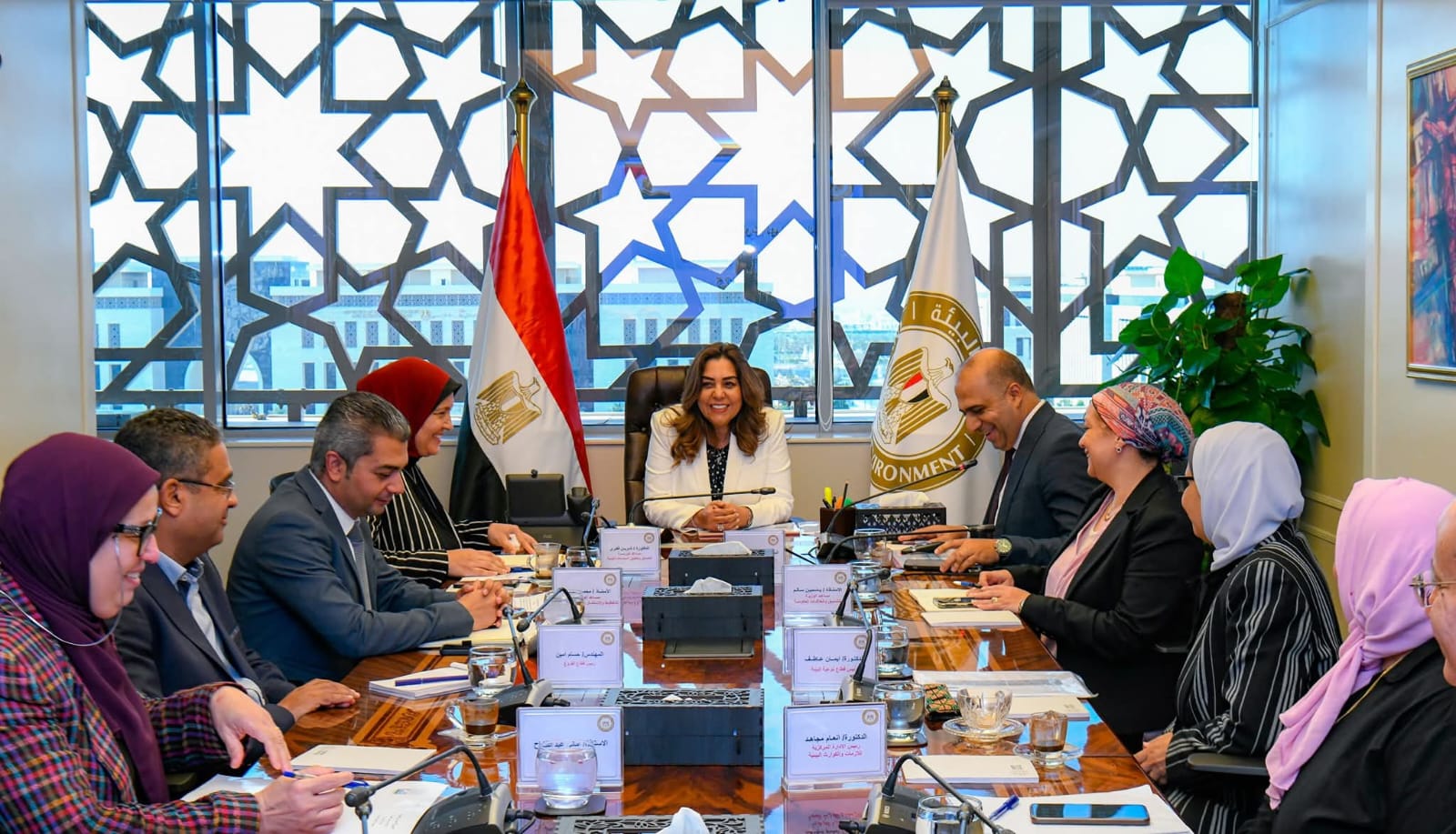

In anticipation of the upcoming fall and winter pollution season, the Ministry of Environment, under the leadership of Dr. Manal Awad, Minister of Local Development and Acting Minister of Environment, has unveiled an ambitious national action plan to address acute air pollution episodes, widely known as the “black cloud.”
During a high-level meeting with officials from the Ministry of Environment, Ministry of Local Development, and the Waste Management Regulatory Authority, Dr. Awad presented the 2025/2026 roadmap. The strategy outlines comprehensive measures to tackle air quality deterioration, particularly in regions prone to agricultural waste burning and industrial emissions.

Early Warning Insights and Strategic Outlook
According to data from the Early Warning System, the percentage of still and light wind hours during the upcoming fall and winter is projected to reach 33.6%, a figure comparable to levels recorded in 2004 and 2023. These calm weather conditions are typically associated with higher concentrations of airborne pollutants, as they hinder natural dispersion.
Dr. Awad noted that despite similar environmental conditions last year, Egypt successfully mitigated pollution episodes through strategic coordination across ministries, local governments, and regulatory bodies. “We witnessed tangible success in limiting the spread of the black cloud in 2024, and our objective now is to replicate and expand upon those achievements,” she stated.
Targeted Pollution Control Measures
The Ministry’s approach for 2025/2026 focuses on source control and rapid response. A key component involves the inspection of vehicle exhaust emissions, particularly in high-traffic urban areas, to minimize transport-related pollution. Simultaneously, industrial facilities will be subject to environmental audits conducted in collaboration with the Industrial Development Authority, ensuring full compliance with emissions regulations.
Open burning of agricultural waste—especially rice straw—remains a major contributor to seasonal smog. To combat this, the Ministry will leverage satellite imaging technology to detect unauthorized fires in real time and activate immediate field interventions. A network of air quality monitoring stations and the national Early Warning System will support data-driven decisions and help forecast high-risk periods.
Agricultural Waste Management and Farmer Incentives
The plan places strong emphasis on sustainable agricultural practices. The Ministry of Environment will continue supplying rice straw compacting and recycling equipment to key governorates, enabling farmers to turn waste into economically valuable resources. This initiative not only reduces environmental damage but also provides financial incentives to farmers, aligning economic gain with environmental stewardship.
To ensure proper waste management at the local level, the Waste Management Regulatory Authority will intensify cooperation with municipal waste units. This includes daily oversight of waste collection, transportation, and disposal, as well as rigorous inspection of treatment centers, intermediate stations, and final landfill sites.
National-Level Coordination and Crisis Management
Central to the success of the plan is institutional integration. Dr. Awad announced the full coordination between the Ministry of Environment’s Central Operations Room and the Ministry of Local Development’s Crisis Management Units in governorates. This step will enable real-time data sharing, synchronized emergency response, and swift enforcement actions.
The strategy is being jointly executed by key ministries and authorities, including the Ministries of Agriculture, Health, Interior, and Industry, alongside the Industrial Development Authority. Priority regions include Greater Cairo, the Delta governorates, and Upper Egypt’s Assiut, where black cloud events have historically been more severe.
Citizen Engagement and Legal Enforcement
Recognizing the critical role of the public, the Ministry will continue to receive citizen complaints and reports regarding unauthorized burning via its official platforms. Additionally, it will launch an awareness campaign targeting small-scale farmers, educating them on the dangers of open burning and the economic benefits of rice straw reuse.
To ensure accountability, the Ministry reiterated its commitment to enforcing Law No. 202 of 2020, under which violators of environmental regulations may face legal action.
Looking Ahead
Dr. Awad concluded the meeting by calling for accelerated inter-ministerial coordination, the timely execution of pollution control procedures, and the rollout of a nationwide public information campaign. “Our success depends on shared responsibility—from state institutions to individual citizens,” she affirmed. “By acting now, we can protect our air, support our farmers, and safeguard public health.”