
Egypt has announced the extension of its flagship initiative to reduce plastic pollution and promote circular economy practices in the single-use plastic value chain, continuing its partnership with the United Nations Industrial Development Organization (UNIDO) and the Government of Japan through 2027.
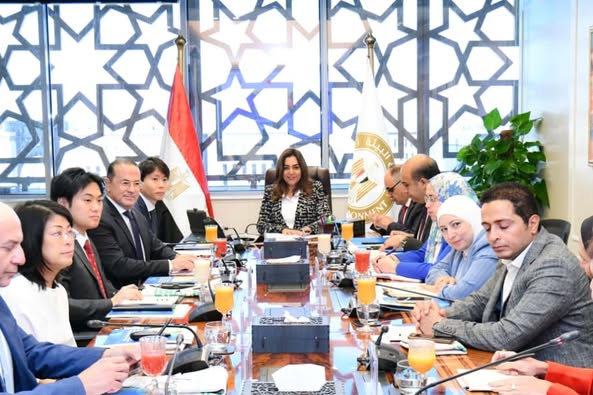
The decision to extend the project, initially scheduled to conclude in 2026, was made during the second Steering Committee meeting held in Cairo. The session was chaired by Dr. Manal Awad, Egypt’s Minister of Local Development and Acting Minister of Environment. The project is funded by a Japanese grant and implemented in cooperation with UNIDO, with the goal of supporting Egypt’s transition to more sustainable models of production and consumption — particularly in industries reliant on plastic.

The initiative focuses on reducing the environmental impact of single-use plastics by promoting circular economy approaches. These include introducing environmentally responsible alternatives, improving waste management systems, and encouraging eco-conscious behavior across industries and among consumers.
Egypt’s strategy involves working closely with stakeholders across the value chain. Representatives from key government bodies attended the meeting, including the Egyptian Environmental Affairs Agency, the Waste Management Regulatory Authority, and the Ministry of Trade and Industry. International partners — among them the Japanese Embassy and UNIDO’s Egypt office — also participated, alongside the Federation of Egyptian Industries and several technical and industrial institutions.
As part of the expanded timeline, Egypt is accelerating the establishment of factories to produce alternatives to plastic in multiple cities, with a specific focus on coastal and tourism-dependent regions such as South Sinai and the Red Sea. These areas, which are rich in biodiversity, are among the most affected by plastic pollution. The government’s objective is to create an enabling environment for these cities to become national models for plastic-free urban zones — a step that supports both environmental protection and sustainable tourism.
The project, which aligns with Egypt’s Vision 2030 and its commitments to international environmental goals, has already delivered a number of concrete outcomes. In coordination with the Egyptian Organization for Standards and Quality, it has facilitated the development of five new national standards for alternatives to single-use plastic bags. These include biodegradable bags, woven and non-woven plastic alternatives, fabric-based bags, and paper bags.
In parallel, the project has launched a national public awareness campaign titled “Reduce It”, targeting consumer behavior related to plastic use.
On the industrial front, efforts are underway to improve the infrastructure needed to support the transition to plastic alternatives. Assessments of local laboratories have been conducted to identify facilities capable of performing compliance testing for newly adopted product standards. Support is also being provided to ensure that the Egyptian Organization for Standards and Quality and the Export and Import Control Authority are fully equipped to monitor adherence to these benchmarks.
A market study, conducted in partnership with Nile University, has provided insights into the availability of raw materials, readiness of local manufacturers, and suitable technologies to scale up local production of plastic alternatives. This study serves as a roadmap for both public and private sector actors aiming to invest in sustainable materials.
Additionally, capacity-building initiatives are in progress to train institutions, industry representatives, and small and medium-sized enterprises. These programs are focused on ensuring continuity in knowledge transfer and expanding the reach of the project to new regions and sectors. Collaborative efforts with private companies are also being pursued, including the installation of recycling units in retail and public spaces to promote proper plastic waste collection and reuse.
The Japanese government, which has been a key financial and diplomatic supporter of the project, has reiterated its commitment to bilateral environmental cooperation with Egypt. This initiative stems from broader diplomatic engagement between the two nations to address shared challenges related to sustainability and climate change.
UNIDO, which has a long-standing presence in Egypt, has praised the progress of the project and reaffirmed its intention to deepen collaboration on industrial and environmental development. With Egypt being one of the largest recipients of UNIDO projects globally, and Japan among the organization’s top contributors, the partnership is seen as a model for effective international cooperation.
As Egypt moves forward with its efforts to curb plastic pollution, the project’s extension is expected to provide the time and resources needed to build on early successes and ensure the full realization of its objectives. The Ministry of Environment has called for a detailed action plan outlining the next phase of implementation, prioritizing industrial support, legislative development, and public engagement.
By integrating policy reform, industrial innovation, and social awareness, Egypt’s partnership with UNIDO and Japan signals a decisive step toward a future where economic growth is aligned with environmental sustainability — and where plastic-free cities become a tangible reality, not just an aspiration.