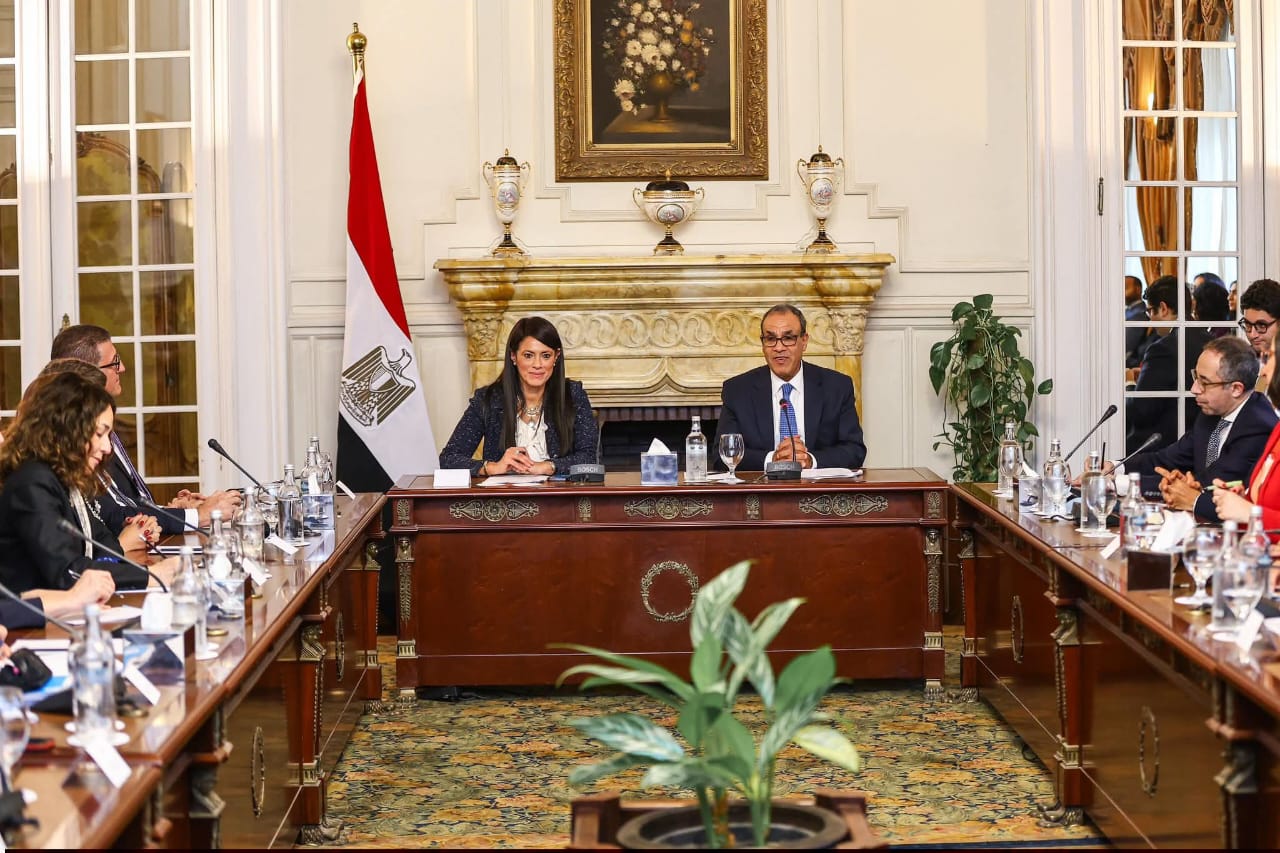

Egypt’s Minister of Planning, Dr. Rania Al-Mashat, reaffirmed that the partnership between the Government of Egypt and the United Nations is grounded in national ownership, transparency, and mutual accountability. The collaboration, she said, reflects Egypt’s long-term vision for inclusive and sustainable growth under President Abdel Fattah El-Sisi’s leadership.
Al-Mashat made the remarks during a high-level roundtable hosted by Foreign Minister Badr Abdel Aaty, which brought together heads of the executive boards of major UN programs and agencies, including the UNDP, UNFPA, UNOPS, UNICEF, UN Women, and the World Food Programme (WFP).

Economic Reforms Bolster Investment Climate
The minister highlighted the structural and economic reforms Egypt has implemented in recent years, noting that they have strengthened macroeconomic stability, improved credit ratings, and enhanced the investment environment. These reforms, she explained, have positioned Egypt as one of the region’s most dynamic emerging markets and an increasingly attractive destination for local and foreign investors.
She underscored that the United Nations Sustainable Development Cooperation Framework (UNSDCF) 2023-2027 serves as the umbrella framework for joint action, aligning national priorities with the UN’s 2030 Sustainable Development Goals. The framework is co-led by the Ministry of Planning and Economic Development and the UN Resident Coordinator Office, in coordination with Egyptian government institutions.
National Narrative for Inclusive Economic Growth
Al-Mashat pointed to Egypt’s recently launched “National Narrative for Economic Development: Policies Supporting Growth and Job Creation”, which defines the country’s roadmap for higher productivity and inclusive employment.
She also cited the success of the “NWFE” (National Platform for Green Projects) initiative, which has mobilized nearly $5 billion in private-sector investments since 2022 to finance renewable-energy and climate-resilient projects.
According to the minister, Egypt aims to build synergies between UN partnerships and other international financial institutions to channel investment, empower the private sector, and strengthen South-South and triangular cooperation.
Expanding UN-Egypt Cooperation
The roundtable reviewed avenues for expanding cooperation between Egypt and UN agencies across priority sectors, including food security, healthcare, education, water management, child welfare, and social protection for vulnerable communities.
Both ministers praised the UN’s constructive role in promoting peace and sustainable development at regional and global levels, and commended the wide range of UN-supported development programs currently underway in Egypt.
A key focus of the discussions was women’s empowerment, emphasizing the importance of enhancing female economic participation and leadership roles in both the public and private sectors — central pillars of Egypt’s 2030 vision for sustainable and inclusive growth.