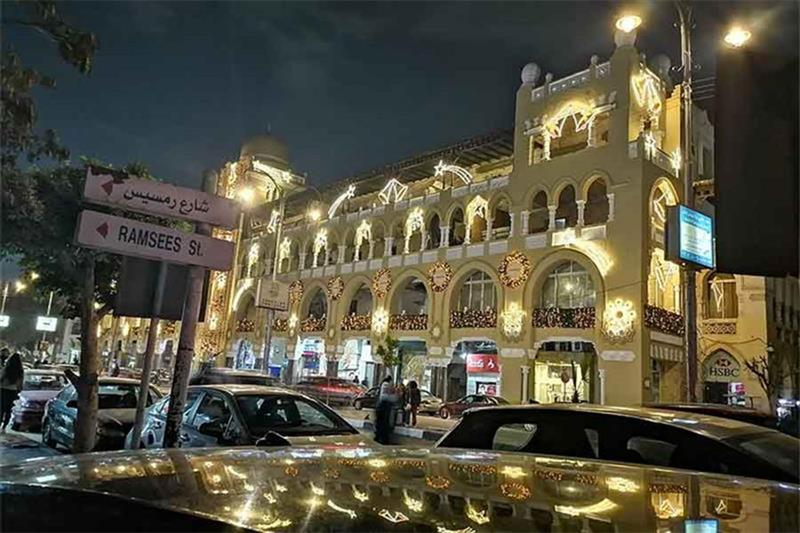

Cairo To Rationalize 75% of Street Lighting To Boost Nat. Gas Exports
Cairo has started its plan to reduce lighting in streets, public squares, and main axes by 75% as part of the government’s plan to rationalize energy consumption nationwide to export more natural gas.

Cairo Governor, Khaled Abdel-Aal, directed heads of districts across the capital to follow up on rationalizing electricity consumption in all buildings and facilities belonging to the governorate during official work hours, as well as reducing the lighting of billboards.
He also ordered interior and exterior lights turned off on government buildings after work hours unless necessary as in the case of the operation and emergency rooms.
Moreover, the statement said, shops will be obliged to reduce the overly bright lights used on their facades while public institutions will have to use LEDs to save power.
Large sports facilities, including clubs, stadiums, football playgrounds, and covered halls, will have to reduce power use and switch off all lights following their night events, the statement added.
In August, Madbouly announced the government’s plan for energy rationalization amid soaring energy prices in the wake of the Russia-Ukraine war that broke out in February 2022.
The premier said the government is rationalizing energy to save natural gas to redirect it for exporting and increase Egypt’s sources of foreign currency during the global energy crisis.
Egypt recorded an electricity production surplus of more than 25%, according to officials. At the time, Madbouly said Egypt seeks to redirect 15% of natural gas allocated for electricity generation to export to bring in more foreign currency.
Madbouly informed the governors that redirecting only 10% of the national gas production to exportation would bring almost $300 million per month while redirecting 15% would bring in $450 million per month.
“The more we can rationalize our electricity consumption, the more we will succeed in saving foreign currency,” Madbouly said.
Egypt has achieved natural gas self-sufficiency due to its recent major gas discoveries.