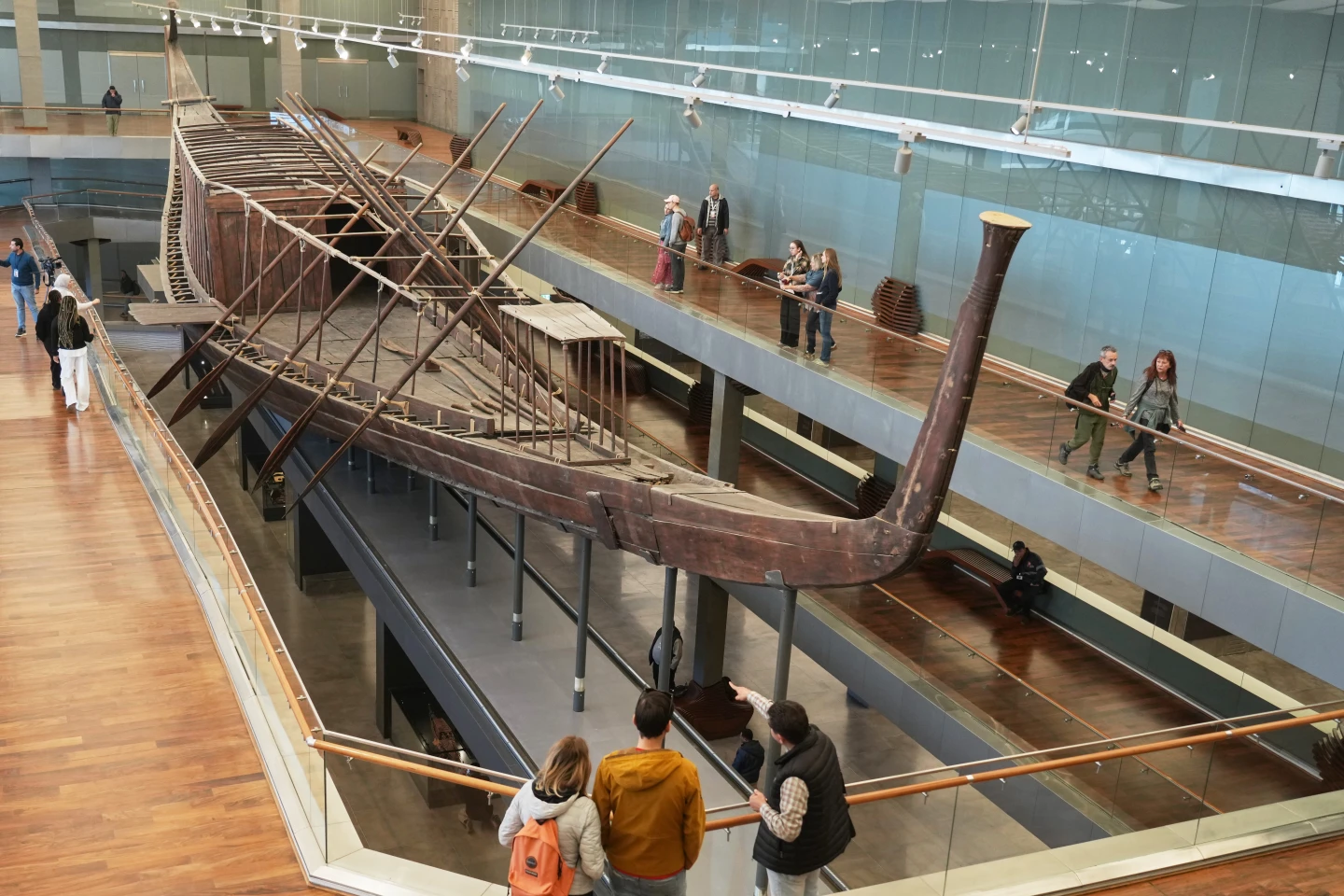

In a rare blend of archaeology and public spectacle, conservators at Egypt’s Grand Egyptian Museum (GEM) have begun assembling a 4,500-year-old boat belonging to King Khufu, allowing visitors to witness one of the most ambitious restoration projects of the modern era unfold in real time.
Work on the cedarwood vessel started Tuesday morning inside the museum’s main exhibition hall, where dozens of onlookers watched specialists carefully position the first of 1,650 wooden components. The boat, measuring 42 meters (137 feet) in length, is one of two ancient ships discovered near the Great Pyramid of Giza and is believed to date back to the reign of Khufu, the pharaoh who ordered the pyramid’s construction.

According to Issa Zeidan, head of restoration at the Grand Egyptian Museum, the painstaking assembly is expected to take around four years. Once completed, the vessel will stand alongside its already-restored twin, offering an unprecedented, side-by-side view of the ancient craftsmanship that accompanied royal burials in the Old Kingdom.
A boat fit for a pharaoh
The two boats were originally discovered in 1954, buried in pits opposite the southern side of the Great Pyramid. While one was assembled and displayed decades ago, the second remained dismantled for years. Excavation of its wooden parts began in 2014, according to the museum’s official records.
Despite decades of research, the exact purpose of the boats remains a subject of scholarly debate. Egyptologists widely believe they were either used to transport Khufu’s body during his funeral rites or symbolically intended for his journey in the afterlife alongside Ra, the ancient Egyptian sun god.
King Khufu ruled Egypt more than 4,500 years ago during the Fourth Dynasty, a period marked by monumental architectural achievements and centralized royal power. His Great Pyramid remains the only surviving wonder of the ancient world.
Egypt’s Cultural Revival
The restoration is unfolding inside the newly inaugurated Grand Egyptian Museum, a $1 billion cultural complex near the Giza pyramids on the outskirts of Cairo. Opened last month with significant international attention, the museum has been billed as the largest archaeological museum in the world.
GEM houses nearly 50,000 artifacts, including the full collection of treasures from the tomb of King Tutankhamun, discovered in 1922. Egyptian officials see the museum as a cornerstone of the country’s efforts to revive tourism and support an economy strained by years of global and regional challenges.
By turning conservation into a live exhibition, the museum aims not only to preserve ancient heritage but also to bring the public closer to the science and patience behind modern archaeology.
As the massive timbers of Khufu’s boat slowly come together, visitors are offered a front-row seat to history—watching an ancient royal vessel sail once more, not on the Nile, but into the public imagination.