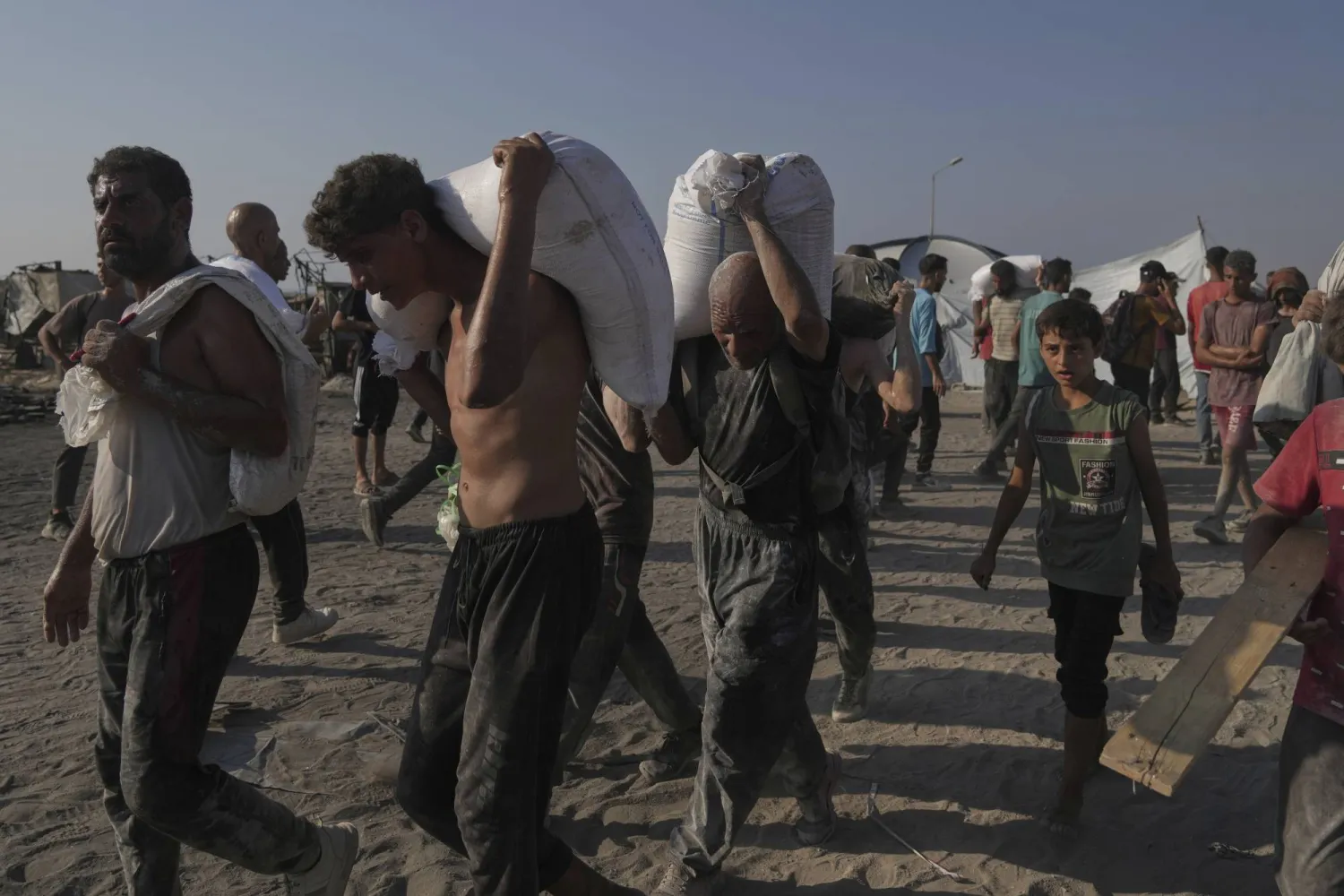

After months of mounting international pressure and dire warnings from humanitarian organizations, trucks loaded with humanitarian aid have begun moving from Egypt into the Gaza Strip, according to Egyptian state-affiliated broadcaster Al Qahera News. This marks a pivotal shift in the effort to address what the United Nations has described as a “catastrophic” humanitarian crisis in the Palestinian enclave.
The aid convoys, reported to be carrying tons of food and emergency supplies, are moving toward the Karam Abu Salem (Kerem Shalom) crossing—one of the few gateways between Gaza and the outside world. Footage from Al Qahera News showed dozens of trucks navigating the route from Rafah, a border town in Egypt’s northern Sinai.

The development follows Israel’s announcement over the weekend that it has initiated aid airdrops into Gaza and will implement new “humanitarian corridors” to facilitate the movement of United Nations aid convoys. Additionally, the Israeli military stated that it would begin “humanitarian pauses” in densely populated areas of Gaza to allow safer distribution of aid.
Humanitarian agencies have long warned of “mass hunger” sweeping the territory, exacerbated by Israel’s months-long blockade, which began in March and was only partially eased in May under strict new entry conditions. Many aid organizations say that the limited supplies permitted through have fallen far short of what is needed to avert famine.
The UN and relief groups assert that Israeli-imposed constraints on access, movement, and logistics have made large-scale distribution nearly impossible.
The aid impasse has become a flashpoint in the wider debate over humanitarian access during conflict, drawing condemnation from international governments, rights groups, and UN agencies. The recent movement at the Egyptian border comes after sustained diplomatic engagement involving Cairo, Washington, and various European and Gulf states—all urging immediate and unfettered aid access to Gaza.
The reopening of the Kerem Shalom crossing to aid trucks is likely to provide a temporary lifeline, but relief organizations stress that a sustained, large-scale flow of aid—and safe conditions for its distribution—are urgently needed to prevent a complete collapse of Gaza’s food and health infrastructure.