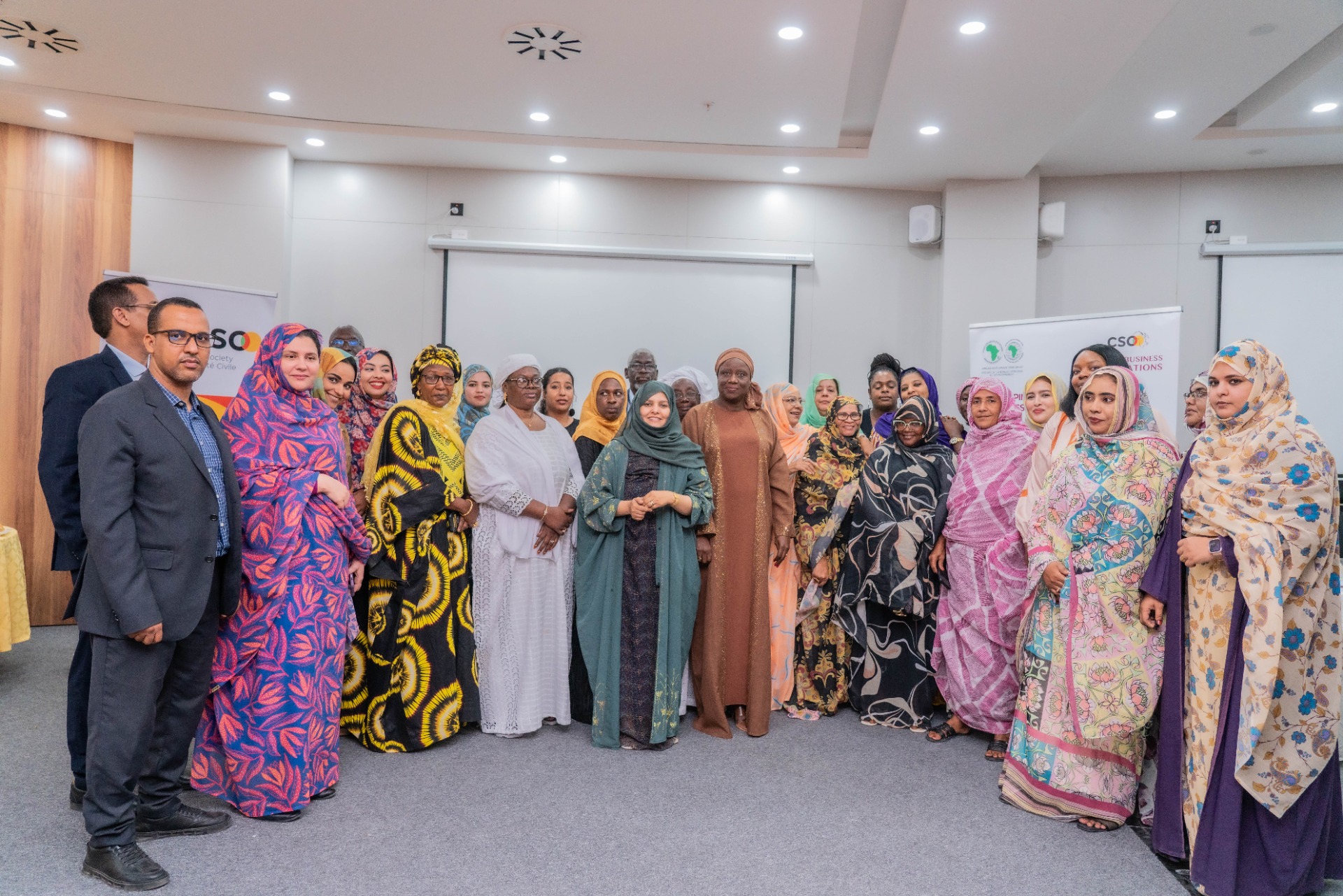

The African Development Bank (AfDB) has released the findings of a first-of-its-kind continental study mapping women entrepreneurs’ associations across 16 African countries—revealing significant institutional and financial challenges that continue to hinder women’s full participation in economic growth.
Unveiled at a multi-stakeholder workshop on August 6 in Nouakchott, the report finds that while nearly one in four African women is an entrepreneur, a striking 87 percent of women’s associations lack formal financial management capacity. Additionally, only 29 percent of these associations maintain partnerships with financial institutions, limiting their access to credit and long-term sustainability. In Mauritania specifically, 83 percent of associations rely solely on membership fees, highlighting an urgent need for diversified and sustainable funding models.

“This workshop is a genuine space for exchange, co-creation, and forward-looking engagement. We are here to combine our expertise and chart the next steps to support women entrepreneurs’ associations across our continent, and in Mauritania in particular,” said Zeneb Touré, Manager of the Civil Society and Community Engagement Division at the African Development Bank
Critical Findings and Regional Insights
The report offers a comprehensive view of the operational and financial structures of women entrepreneurs’ associations across the continent. It identifies institutional gaps in governance, training, and access to finance—while also documenting success stories that can be replicated in similar contexts.
“These figures confirm our daily experience in the field. Our associations are brimming with potential, but they need structured support to multiply their impact,” said Fatimetou Mint Sidi Mohamed O. Elvil, President of the Mauritanian Council of Women Entrepreneurs.
The data underscores the need for integrated capacity-building programs, targeted financial products, and stronger institutional linkages between women-led associations and the formal financial sector.
A Launchpad for Policy and Partnership
The workshop brought together stakeholders from civil society, government, financial institutions, and development agencies to analyze the findings, identify priority areas, and propose actionable strategies. Participants emphasized the importance of cross-sector collaboration to address systemic barriers.
“This study is of critical importance. It provides a comprehensive overview of our associations, their institutional capacities, and their specific needs,” said Lematt Mint Megueya, President of the Mauritanian Union of Women Entrepreneurs and Traders (UMAFEC).
The formal handover of the report to representatives of Mauritanian women’s associations marks the beginning of a new phase of collaboration—positioning these associations not merely as beneficiaries, but as drivers of economic transformation.
Aligning with AFAWA and AfDB’s Gender Strategy
The initiative supports the African Development Bank’s Affirmative Finance Action for Women in Africa (AFAWA) program, launched in 2016 to bridge an estimated $42 billion financing gap for women entrepreneurs. To date, AFAWA has mobilized over $1.2 billion through partnerships with 185 financial institutions, facilitating access to capital for thousands of women-led businesses.
The mapping effort also advances the objectives of the AfDB’s 2021–2025 Gender Strategy, which seeks to dismantle structural barriers and promote equal access to financial services, infrastructure, and opportunity across all sectors.
Blueprint for Inclusive Growth
As the Bank continues its mapping exercise in other countries, the study is expected to inform future policy, investment strategies, and capacity-building initiatives. By identifying both challenges and proven solutions, the African Development Bank is equipping policymakers, financial actors, and development partners with the data and tools needed to empower women entrepreneurs at scale.
“Africa’s future lies in harnessing the untapped potential of its women entrepreneurs,” said Touré. “This report lays the foundation—but its success will depend on shared commitment and coordinated action.”