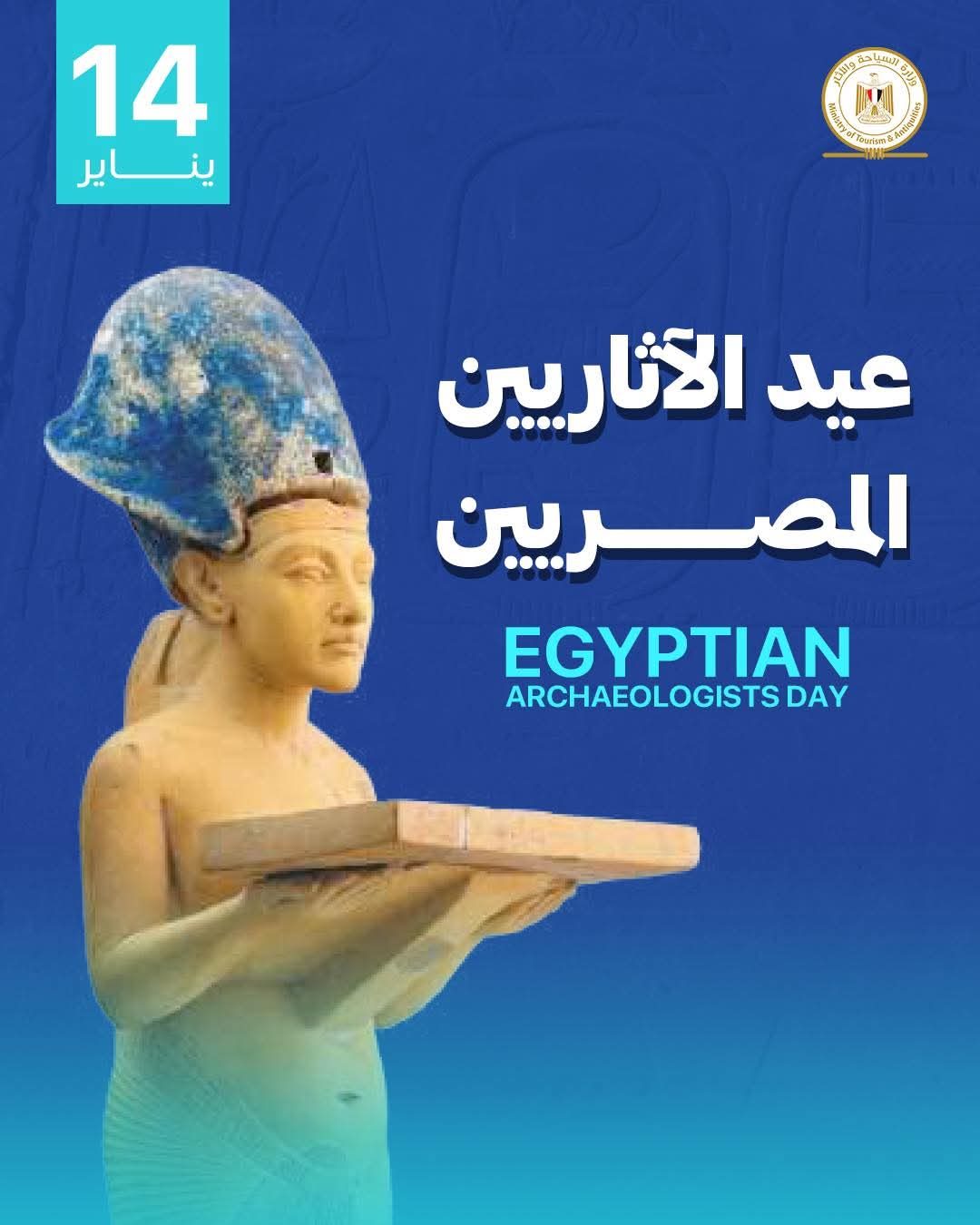

Behind every restored temple wall, carefully preserved manuscript, and meticulously conserved artifact lies the quiet dedication of Egypt’s archaeologists and heritage conservators—professionals whose work safeguards one of the world’s richest cultural legacies.
Across archaeological sites, museums, and restoration laboratories nationwide, these specialists carry out a mission that extends far beyond routine work. They are the custodians of a civilization that spans thousands of years, ensuring that Egypt’s ancient heritage endures for future generations despite the pressures of time, climate, and human activity.

Archaeologists continue to uncover new chapters of Egypt’s past through excavations that reshape historical understanding and reinforce the country’s global cultural standing. At the same time, heritage conservators labor—often behind the scenes—to stabilize fragile artifacts, restore monuments, and apply advanced scientific techniques to protect irreplaceable treasures from deterioration.
Their work demands a rare combination of scientific expertise, historical knowledge, precision, and patience. From conserving wall paintings in ancient tombs to restoring statues, manuscripts, and architectural elements, these professionals balance modern technology with respect for authenticity and historical integrity.
The role of archaeologists and conservators has grown increasingly complex in recent years, as climate change, urban expansion, and mass tourism pose new challenges to heritage protection. Yet, through continuous training, international cooperation, and adherence to global conservation standards, Egypt’s heritage specialists remain at the forefront of preservation efforts.
Officials at the Ministry of Tourism and Antiquities have repeatedly emphasized that protecting cultural heritage is not only a national duty but also a cornerstone of Egypt’s cultural identity and a key driver of sustainable tourism and economic development.
As Egypt continues to showcase its archaeological discoveries and restored sites to the world, the contributions of those working tirelessly in the field deserve recognition and respect. Their efforts ensure that the story of Egypt—etched in stone, written on papyrus, and embodied in monuments—remains alive, accessible, and protected.
In honoring Egypt’s archaeologists and heritage conservators, the nation pays tribute to the guardians of its past and the protectors of a legacy that belongs not only to Egypt, but to all humanity.