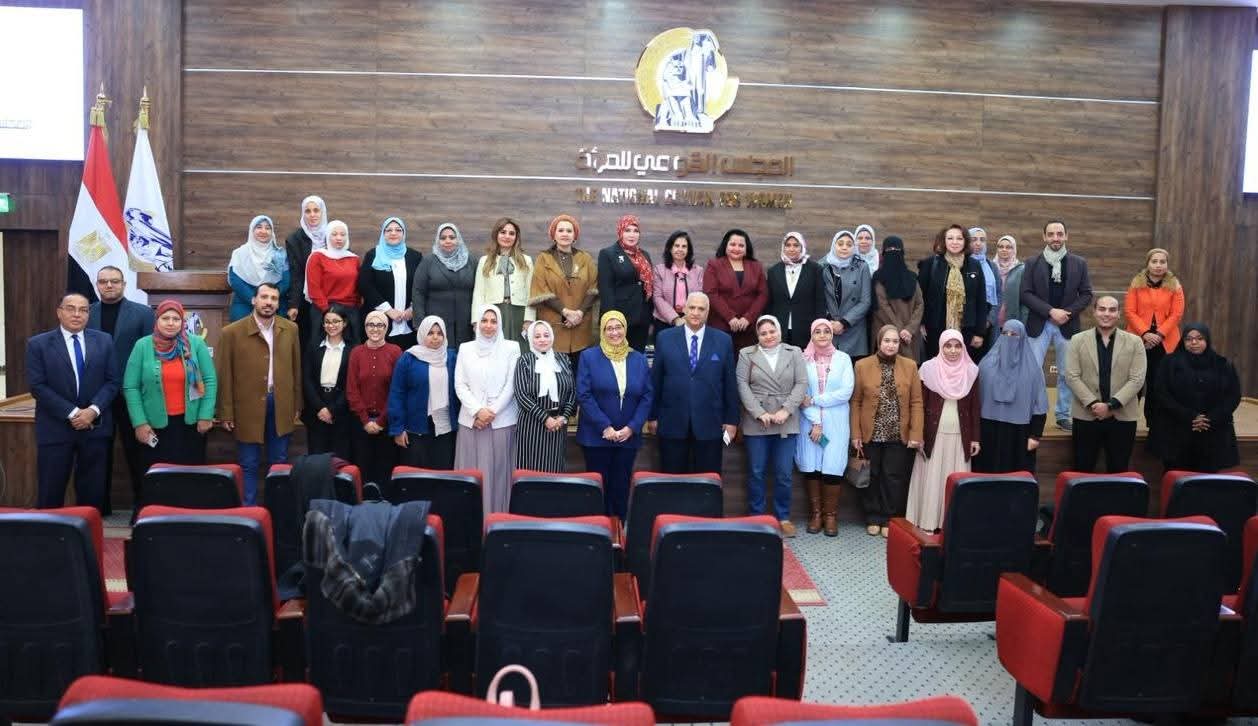

The National Council for Women (NCW) reaffirmed its role in advancing women’s leadership in science, research, and digital security by organizing a high-level workshop titled “Leveraging Egyptian Knowledge Bank Tools to Enhance Scientific Research and Innovation.” The event was held under the auspices of the Council’s Committee on Scientific Research, Technology, and Cybersecurity, reflecting a strategic commitment to empowering women within Egypt’s knowledge economy.
The workshop aimed to showcase the capabilities of the Egyptian Knowledge Bank (EKB) and its pivotal role in strengthening the national research and innovation ecosystem, particularly by equipping women researchers, academics, and professionals with advanced digital tools and trusted scientific resources.

Prominent Women Leaders at the Forefront
The workshop brought together a distinguished group of women leaders and experts, including:
- Prof. Marian Azar, NCW member and Rapporteur of the Committee on Scientific Research, Technology, and Cybersecurity
- Counselor Marian Kaldas, NCW member
- Prof. Nadia Zakaria, former Minister of Scientific Research and advisor to the committee
- Prof. Merit Rostom, Professor of Biotechnology at the Academy of Scientific Research and committee member
They were joined by members of NCW’s permanent committees, representatives of the Cairo branch, and Mohamed Saleh, an official trainer at the Egyptian Knowledge Bank.
Responsible Use of Artificial Intelligence in Research
In her keynote address, Prof. Marian Azar addressed the growing challenges facing scientific research amid the rapid expansion of artificial intelligence applications. She stressed the importance of ethical, responsible, and informed use of AI, emphasizing that such technologies must serve as supportive tools rather than substitutes for human intellect and critical analysis.
Azar praised the Egyptian Knowledge Bank as a “national knowledge treasure”, describing it as a foundational pillar for empowering researchers and students through access to reliable, diverse, and high-quality scientific sources. She also highlighted the necessity of strengthening research awareness, encouraging critical data analysis, and safeguarding scientific integrity through continuous human oversight at every stage of the research process.
Ethics, Cybersecurity, and Women’s Awareness
Former Minister Prof. Nadia Zakaria delivered a comprehensive presentation on research ethics in the age of artificial intelligence, underscoring that research participants are volunteers whose dignity, rights, and psychological well-being must be protected. She emphasized informed consent, transparency, and adherence to ethical standards as non-negotiable pillars of credible scientific inquiry, with the ultimate goal of serving humanity.
Meanwhile, Prof. Merit Rostom highlighted alarming findings from national and international cybersecurity reports, warning of increasingly sophisticated cyberattacks targeting users in more than 150 countries. She drew attention to emerging threats such as Zero-Click attacks, advanced spyware, and the growing phenomenon of “digital mercenaries,” stressing the urgent need to raise cybersecurity awareness—particularly among women researchers and professionals operating in digital environments.
Expanding Access to Knowledge for Women Researchers
Concluding the workshop, Mohamed Saleh delivered a practical overview of the Egyptian Knowledge Bank, explaining registration procedures, effective search strategies, and methods for accessing academic journals, books, and theses. He also highlighted EKB’s online training workshops and their role in enhancing researchers’ skills and enabling effective use of digital knowledge resources.
Empowering Women Through Knowledge and Innovation
The workshop reflects the National Council for Women’s broader vision of integrating women into Egypt’s scientific, technological, and innovation-driven future, ensuring they are equipped with the tools, awareness, and leadership skills required to contribute safely, ethically, and effectively to national development.