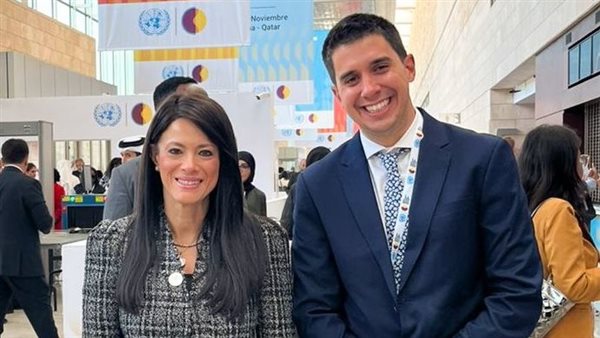

On the sidelines of the Second World Summit for Social Development, held from November 4–6, 2025, in Doha under the auspices of the United Nations General Assembly and in collaboration with the Government of Qatar and the UN Department of Economic and Social Affairs (UNDESA), Egypt’s Minister of Planning, Economic Development, and International Cooperation, Dr. Rania Al-Mashat, held a series of bilateral meetings with key international partners and UN agencies.
Dr. Al-Mashat participated as part of Egypt’s official delegation, led by Prime Minister Mostafa Madbouly, representing President Abdel Fattah El-Sisi. Her meetings highlighted Egypt’s continued engagement with the international community to advance human development, youth empowerment, women’s equality, and sustainable economic growth.

Strengthening UN–Egypt Partnership on Youth Empowerment
The Minister met with Felipe Paullier, UN Assistant Secretary-General for Youth Affairs and Head of the UN Youth Office, to discuss the strong partnership between Egypt and the United Nations across various organizations and development programs.
The discussion focused on Egypt’s national initiatives to empower young people and invest in human capital, particularly through the “Shabab Balad” (Youth Country) initiative — the Egyptian chapter of the global Generation Unlimited program — which aims to equip youth with education, skills, and employment opportunities.
Tackling Poverty and Advancing Human Development
Dr. Al-Mashat also met with Sabina Alkire, Director of the Oxford Poverty and Human Development Initiative (OPHI), to explore ways to enhance joint cooperation in poverty reduction and social protection policy.
She outlined Egypt’s ongoing efforts to strengthen social protection systems through flagship national programs such as:
- “Takaful and Karama” (Solidarity and Dignity) — Egypt’s largest conditional cash transfer program;
- The “Hayah Karima” (Decent Life) presidential initiative — aimed at transforming rural communities by improving infrastructure and public services for millions of citizens;
- The “100 Million Health” campaign — which has expanded preventive healthcare access nationwide.
Al-Mashat emphasized that these integrated programs collectively improve Egypt’s human development indicators, in line with Egypt Vision 2030 and the UN Sustainable Development Goals (SDGs).
Advancing Gender Equality Through Strategic Partnerships
In a separate meeting with Dr. Sima Bahous, UN Under-Secretary-General and Executive Director of UN Women, discussions focused on strengthening cooperation within the framework of Egypt’s National Strategy for the Empowerment of Women.
The talks highlighted joint efforts to promote gender equality in the labor market, expand economic participation, and ensure equal opportunities through partnerships between the Egyptian government, private sector, and civil society.
Dr. Al-Mashat reaffirmed that women’s empowerment is a central pillar of the UN–Egypt Partnership Framework (2023–2027), underscoring its role in driving inclusive and sustainable economic development.
Expanding Collaboration on Youth Education and Economic Empowerment
The Minister also met with Fahad Abdullah Malik, Director of External Relations at the Education Above All Foundation, and Maan Mohammed Al-Ansari, CEO of the Foundation’s Economic Empowerment Sector.
The discussions focused on expanding cooperation in youth economic empowerment, supporting education access for vulnerable groups, and developing training and capacity-building programs to prepare young people for the labor market. Both sides emphasized the importance of leveraging entrepreneurship and digital transformation to create sustainable employment opportunities for youth.
Egypt’s Vision for Inclusive and Sustainable Development
Dr. Al-Mashat’s series of meetings in Doha reaffirm Egypt’s commitment to building global partnerships that advance inclusive growth, social equity, and empowerment of youth and women.
Her engagements reflect Egypt’s broader approach to integrating education, innovation, and digital transformation into national development policy, positioning the country as a regional model for sustainable human capital investment.